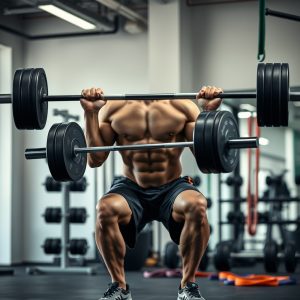
The Strategic Symphony of Body Recomposition: Crafting a Functional Physique Through Precision Training and Nutrition

In the realm of body transformation, the pursuit of a lean, muscular physique is a journey that demands precision, strategy, and unwavering commitment. At the heart of this journey lies the concept of body recomposition, a process that involves the strategic manipulation of muscle mass and body fat percentage to achieve a functional physique. This article delves into the strategic symphony of body recomposition, exploring the intricate dance of training, nutrition, and recovery that orchestrates this transformative process.
Understanding Body Recomposition
Body recomposition is the process of building lean muscle mass while reducing body fat percentage. It’s a holistic approach to fitness that goes beyond the superficial pursuit of weight loss, focusing instead on the development of a strong, functional physique. This process is not about starving yourself or engaging in extreme measures, but rather about making strategic adjustments to your training and nutrition to maximize muscle growth and fat loss.
The Role of Progressive Overload
Progressive overload is the cornerstone of hypertrophy training, a principle that involves gradually increasing the stress placed on your muscles. This can be achieved through various means, such as increasing the weight of your lifts, the number of repetitions, or the number of sets. By progressively overloading your muscles, you stimulate muscle protein synthesis, the process by which your muscles grow and repair themselves. This, in turn, leads to increased lean muscle mass and improved strength and power.
The Importance of Caloric Deficit
A caloric deficit is essential for fat loss, but it’s crucial to manage this deficit in a way that preserves your hard-earned muscle mass. This is where the concept of clean bulking comes into play. Clean bulking involves consuming a slight caloric surplus to support muscle growth, while still maintaining a low body fat percentage. This approach allows you to build muscle without the associated fat gain, ensuring that your physique remains lean and athletic.
Nutrition: The Fuel for Your Transformation
Nutrition plays a pivotal role in the body recomposition process. It’s not just about what you eat, but also about when you eat, and how much you eat. Macronutrient tracking, the process of tracking your intake of macronutrients (protein, carbohydrates, and fats), can help you optimize your nutrition for muscle growth and fat loss.
Macronutrient Tracking
Macronutrient tracking involves monitoring your intake of protein, carbohydrates, and fats. Protein is essential for muscle growth and repair, carbohydrates are the primary source of energy for your workouts, and fats provide a concentrated source of energy and support hormone function. By tracking your macronutrients, you can ensure that you’re consuming the right amount of each to support your training and body recomposition goals.
Somatotype Nutrition
Somatotype nutrition is an approach to nutrition that takes into account your body type, or somatotype. There are three primary somatotypes: ectomorphs, mesomorphs, and endomorphs. Each of these body types has different nutritional needs, and by tailoring your nutrition to your somatotype, you can optimize your body recomposition process.
Training: The Blueprint for Your Physique
Training is the blueprint for your physique. It’s not just about lifting weights, but also about the type of training you do, how often you train, and how you structure your workouts. Resistance training, the process of training with resistance, is the primary method for building lean muscle mass. However, it’s not the only type of training that’s beneficial for body recomposition.
High-Intensity Interval Training
High-Intensity Interval Training (HIIT) is a form of training that involves short bursts of high-intensity exercise followed by periods of rest or lower-intensity exercise. HIIT has been shown to be effective for fat loss, and when combined with resistance training, it can enhance your body recomposition process. By incorporating HIIT into your training regimen, you can maximize your fat loss while preserving your muscle mass.
Active Recovery
Active recovery is the process of engaging in low-intensity exercise to promote recovery and reduce muscle soreness. This can include activities such as walking, cycling, or yoga. Active recovery is an essential component of the body recomposition process, as it allows your muscles to recover and grow stronger between intense training sessions.
The strategic symphony of body recomposition is a complex and multifaceted process that involves the intricate dance of training, nutrition, and recovery. By understanding and mastering these components, you can craft a functional physique that is not only aesthetically pleasing, but also strong, athletic, and functional. This journey is not a quick fix, but a marathon that demands patience, discipline, and unwavering commitment. However, with the right strategy and approach, you can achieve the lean, muscular physique you’ve always desired, and more importantly, the strength, health, and vitality to enjoy it for years to come.