
Deep Learning in Pathology: How AI is Redefining Cancer Diagnosis and Beyond
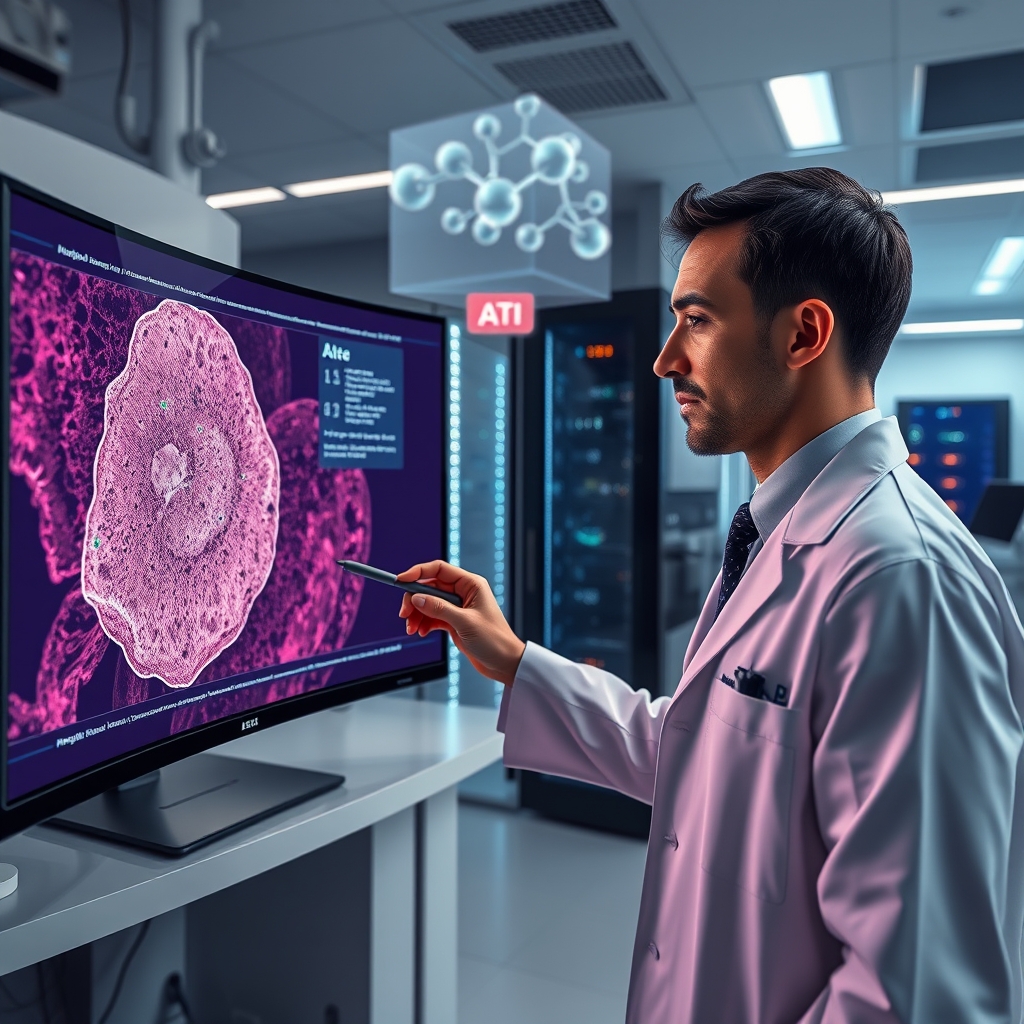
In the quiet hum of a pathology lab, where microscopes have long been the gatekeepers of life-altering diagnoses, a revolution is unfolding. Deep learning, a subset of artificial intelligence, is stepping into the fray, not to replace the keen eyes of pathologists but to augment their capabilities in ways previously unimaginable. The marriage of AI and pathology is not just enhancing accuracy—it is redefining the very boundaries of what is possible in cancer diagnosis and beyond.
The Digital Transformation of Pathology
Traditional pathology relies on the examination of tissue samples under a microscope, a process that, while effective, is inherently subjective and time-consuming. Enter digital pathology, where glass slides are scanned into high-resolution digital images, creating a vast repository of data ripe for AI analysis. This digitization is the first critical step, transforming static slides into dynamic datasets that deep learning algorithms can interrogate with precision and speed.
Deep learning models, particularly convolutional neural networks (CNNs), are designed to mimic the human brain’s ability to recognize patterns. Trained on thousands of annotated images, these models can identify subtle nuances in tissue morphology that might elude even the most experienced pathologists. For instance, in breast cancer diagnosis, AI can distinguish between ductal carcinoma in situ (DCIS) and invasive ductal carcinoma with remarkable accuracy, reducing the risk of misdiagnosis and ensuring patients receive the most appropriate treatment.
From Detection to Prognosis: AI’s Expanding Role
The impact of deep learning in pathology extends far beyond mere detection. AI is increasingly being leveraged to predict patient outcomes, a task that traditionally relies on statistical models and clinical intuition. By analyzing vast datasets of histological images alongside clinical records, deep learning models can identify patterns that correlate with disease progression, recurrence, or response to treatment. This predictive capability is particularly transformative in oncology, where early and accurate prognosis can mean the difference between life and death.
One groundbreaking application is in the grading of tumors. For example, in prostate cancer, the Gleason grading system is a critical determinant of treatment strategy. However, this system is notorious for its inter-observer variability—different pathologists may assign different grades to the same sample. AI models trained on large, diverse datasets can standardize this process, providing consistent and reproducible results that reduce variability and improve patient care.
The Promise of Synthetic Data in Training AI Models
One of the biggest challenges in developing robust AI models for pathology is the scarcity of high-quality, annotated data. Medical data is often siloed, sensitive, and labor-intensive to label. This is where synthetic medical data comes into play. By generating realistic, artificial datasets that mimic the complexity of real-world pathology images, researchers can train AI models without compromising patient privacy or relying on limited real-world samples.
Synthetic data not only accelerates the development of AI tools but also enhances their generalizability. Models trained on diverse synthetic datasets are better equipped to handle the variability inherent in real-world clinical settings, from differences in staining techniques to variations in tissue preparation. This approach is particularly valuable in rare diseases, where real-world data is scarce, and AI can help bridge the gap by generating representative samples for training.
AI and the Future of Personalized Medicine
The ultimate goal of integrating AI into pathology is to move toward a future of truly personalized medicine. By combining histological data with genetic, molecular, and clinical information, AI can help create a holistic view of a patient’s disease. This multi-modal approach enables clinicians to tailor treatments not just to the type of cancer but to the unique biological characteristics of each patient’s tumor.
For instance, in lung cancer, AI can analyze both histological images and genomic data to identify specific mutations that may respond to targeted therapies. This level of precision ensures that patients receive treatments that are not only effective but also minimize unnecessary side effects. The result is a shift from a one-size-fits-all approach to a nuanced, patient-centric model of care.
Overcoming Challenges and Ethical Considerations
Despite its immense potential, the integration of AI into pathology is not without challenges. One of the most pressing concerns is the need for transparency and interpretability. Deep learning models are often criticized as “black boxes,” where the decision-making process is opaque. For pathologists to trust AI, they need to understand how and why a model arrived at a particular diagnosis. Efforts are underway to develop explainable AI (XAI) tools that provide insights into the features driving AI predictions, fostering trust and collaboration between humans and machines.
Ethical considerations also loom large. The use of AI in healthcare raises questions about data privacy, bias, and accountability. Ensuring that AI models are trained on diverse and representative datasets is crucial to avoiding biases that could disproportionately affect certain patient populations. Additionally, clear guidelines must be established to determine liability in cases where AI-assisted diagnoses lead to adverse outcomes.
As deep learning continues to evolve, its role in pathology will only grow more profound. The technology is not here to replace pathologists but to empower them, providing tools that enhance their expertise and enable them to focus on what they do best: delivering compassionate, precise, and life-saving care. The future of pathology is not just digital—it is intelligent, adaptive, and deeply human. In this new era, AI is not just a tool but a partner, working alongside clinicians to unlock the full potential of medical science and redefine the boundaries of what is possible in healthcare.



