The Strategic Symphony of Lean Muscle Mass and Functional Physique: A Holistic Approach to Body Recomposition

Embarking on a journey to achieve lean muscle mass and a functional physique is a testament to your dedication and commitment to self-improvement. Body recomposition, the process of losing fat while gaining muscle, is a strategic dance that requires precision, patience, and a deep understanding of the body’s response to training and nutrition. This article will guide you through the strategic symphony of lean muscle mass and functional physique, offering a holistic approach to body recomposition.
Understanding Body Recomposition
Body recomposition is not merely about losing weight; it’s about transforming your body composition. It involves a caloric deficit to lose fat and a strategic approach to resistance training to build and retain muscle. The key to successful body recomposition lies in the balance between these two components.
Caloric Deficit: The Foundation of Fat Loss
A caloric deficit is essential for fat loss. It’s the difference between the number of calories you consume and the number of calories you burn. To achieve a caloric deficit, you need to track your macronutrients, including carbohydrates, proteins, and fats. The goal is to create a deficit that allows for fat loss while preserving lean muscle mass.
Resistance Training: The Engine of Muscle Growth
Resistance training, or strength training, is the cornerstone of muscle growth. It involves lifting weights to build strength and muscle mass. Progressive overload, the gradual increase in the stress placed on the muscles, is a critical component of resistance training. It stimulates muscle protein synthesis, the process by which your body builds and repairs muscle tissue.
Strategic Training for Lean Muscle Mass
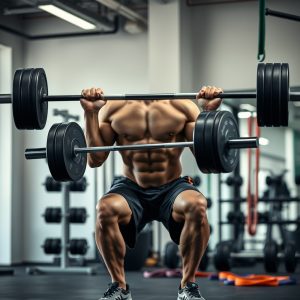
To achieve lean muscle mass, your training program should be strategic and well-rounded. It should include a combination of compound lifts, isolation exercises, and high-intensity interval training (HIIT). Compound lifts, such as squats, deadlifts, and bench press, work multiple muscle groups simultaneously, making them highly efficient for building lean muscle mass.
Progressive Overload: The Key to Muscle Growth
Progressive overload is the gradual increase in the stress placed on the muscles. It can be achieved by increasing the weight, reps, sets, or frequency of your workouts. The goal is to continuously challenge your muscles, forcing them to adapt and grow. Progressive overload is a critical component of any resistance training program aimed at building lean muscle mass.
High-Intensity Interval Training (HIIT): The Catalyst for Fat Loss
HIIT is a form of exercise that alternates between short periods of intense anaerobic exercise and less-intense recovery periods. It’s highly effective for fat loss and can be incorporated into your training program to enhance your results. HIIT workouts can be done with bodyweight exercises, weights, or cardio equipment.
Nutrition: The Fuel for Lean Muscle Mass
Nutrition plays a crucial role in the body recomposition process. It provides the fuel your body needs to perform and recover from workouts. To build lean muscle mass, you need to consume enough protein, carbohydrates, and healthy fats.
Protein: The Building Block of Muscle
Protein is essential for muscle growth and repair. It’s made up of amino acids, which are the building blocks of muscle tissue. To build lean muscle mass, you need to consume enough protein to stimulate muscle protein synthesis. A general guideline is to consume 1.6 to 2.2 grams of protein per kilogram of body weight per day.
Carbohydrates: The Energy Source for Workouts
Carbohydrates are the body’s primary energy source. They provide the fuel your body needs to perform during workouts. To optimize your performance and recovery, you need to consume enough carbohydrates. A general guideline is to consume 2.5 to 3.5 grams of carbohydrates per kilogram of body weight per day.
Healthy Fats: The Essential for Hormone Production
Healthy fats are essential for hormone production and overall health. They provide a concentrated source of energy and help regulate your body’s temperature. To optimize your health and performance, you need to consume enough healthy fats. A general guideline is to consume 0.8 to 1.2 grams of healthy fats per kilogram of body weight per day.
Achieving lean muscle mass and a functional physique is a journey that requires dedication, discipline, and a strategic approach. It’s a process that involves understanding the body’s response to training and nutrition, and using that knowledge to guide your decisions. By incorporating the principles of body recomposition, strategic training, and optimal nutrition into your routine, you can achieve the lean muscle mass and functional physique you’ve always desired. Remember, the journey to a stronger, leaner you is a marathon, not a sprint. Stay consistent, stay disciplined, and most importantly, stay committed to your goals.