AI in Drug Discovery: How Machine Learning is Accelerating Pharmaceutical Breakthroughs
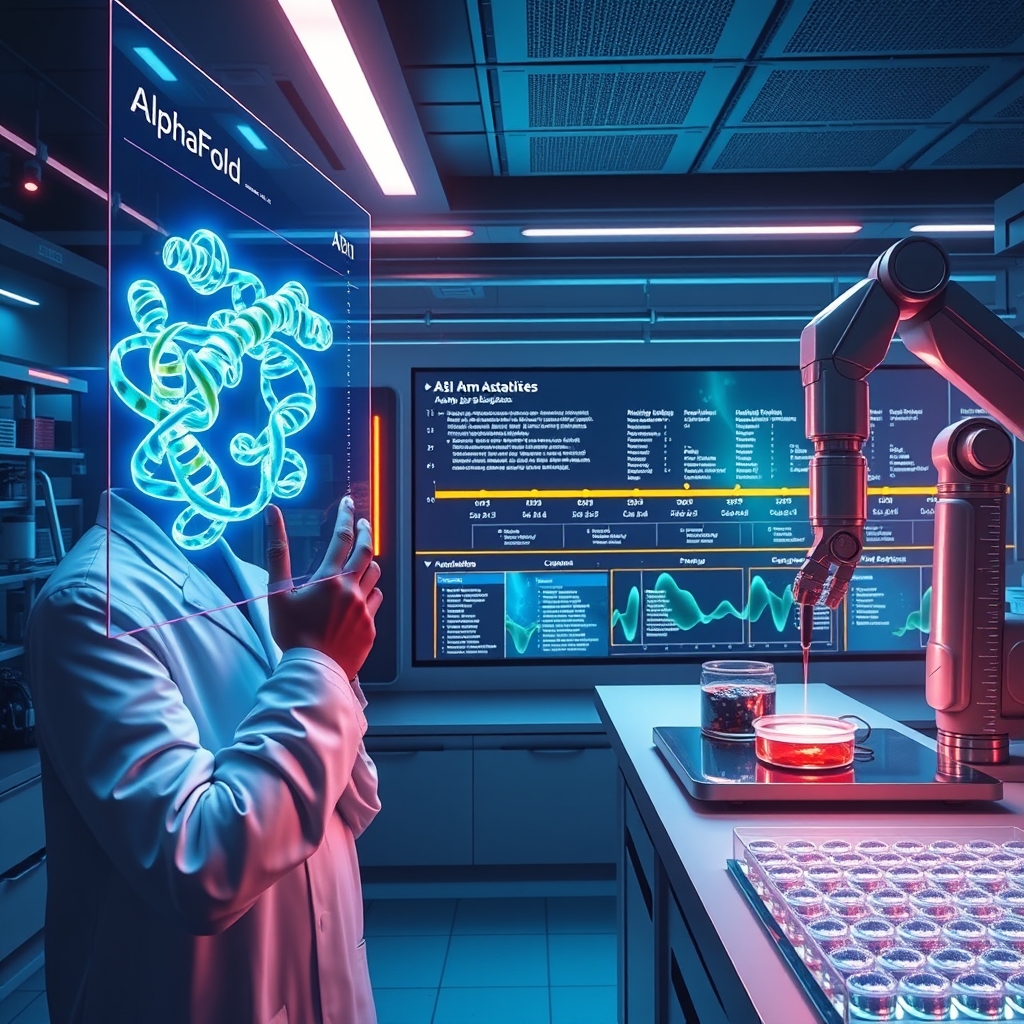
The pharmaceutical industry has long been plagued by the slow, costly, and often unpredictable nature of drug discovery. Traditional methods, which rely on trial-and-error experimentation and labor-intensive laboratory work, can take over a decade and cost billions of dollars to bring a single drug to market. However, the advent of artificial intelligence (AI) and machine learning (ML) is revolutionizing this process, slashing timelines, reducing costs, and unlocking unprecedented possibilities in medicine. By leveraging vast datasets, predictive algorithms, and computational power, AI is not just accelerating drug discovery—it’s redefining what’s possible in pharmaceutical research.
The AI Revolution in Drug Discovery
AI’s role in drug discovery is multifaceted, spanning from the initial identification of drug targets to the optimization of clinical trials. At its core, AI excels at pattern recognition, enabling it to analyze complex biological data with a speed and accuracy that far surpass human capabilities. Tools like AlphaFold, developed by DeepMind, have made headlines for their ability to predict the 3D structures of proteins with near-atomic precision. This breakthrough is critical because a protein’s structure determines its function, and understanding these structures can reveal how diseases operate at a molecular level. With AlphaFold, researchers can now predict the shapes of hundreds of millions of proteins, a task that would have taken decades using conventional methods.
Predicting Molecular Structures and Interactions
One of the most time-consuming aspects of drug discovery is identifying how potential drug compounds interact with their targets. AI models, trained on vast datasets of chemical structures and biological interactions, can simulate these interactions in silico, drastically reducing the need for physical experiments. For example, IBM Watson for Drug Discovery uses natural language processing (NLP) to sift through millions of scientific papers, clinical trial reports, and patents to identify potential drug candidates. By analyzing this unstructured data, Watson can uncover hidden relationships between genes, proteins, and diseases, suggesting novel therapeutic targets that might have been overlooked by human researchers.
Similarly, BenevolentAI employs a combination of ML and knowledge graphs to map out the complex networks of biological interactions involved in diseases. In 2020, BenevolentAI made headlines when its AI platform identified baricitinib, a rheumatoid arthritis drug, as a potential treatment for COVID-19. The drug was later approved for emergency use after clinical trials confirmed its efficacy in reducing mortality rates among hospitalized patients. This achievement demonstrated AI’s potential to repurpose existing drugs for new indications, a process that is typically faster and less risky than developing entirely new compounds.
Case Studies: AI-Discovered Drugs Making an Impact
The success stories of AI in drug discovery are growing, with several compounds identified or optimized by AI now in clinical trials or already on the market. One notable example is DSP-1181, a drug developed by Exscientia in collaboration with Sumitomo Dainippon Pharma. DSP-1181, designed to treat obsessive-compulsive disorder (OCD), was the first AI-discovered drug to enter human clinical trials. Remarkably, the drug was developed in just 12 months—a process that typically takes four to five years using traditional methods. Exscientia’s AI platform analyzed vast datasets of chemical compounds and biological targets to design a molecule that could effectively bind to the desired receptor while minimizing side effects.
Another groundbreaking case is Insilico Medicine’s AI-generated drug for idiopathic pulmonary fibrosis (IPF), a chronic lung disease. Using its generative AI platform, Insilico designed a novel small molecule inhibitor targeting a specific pathway involved in fibrosis. The drug, ISM001-055, entered Phase I clinical trials in 2021, just 18 months after the project’s inception. This rapid timeline underscores AI’s ability to compress the early stages of drug discovery, where traditional methods often stall due to the sheer complexity of biological systems.
Optimizing Clinical Trials with AI
Beyond the lab, AI is also transforming the clinical trial process, which is notoriously slow, expensive, and prone to failure. AI can optimize trial design by identifying the most suitable patient populations, predicting dropout rates, and even suggesting optimal dosing regimens. For instance, AI-powered platforms like Deep 6 AI use NLP to analyze electronic health records (EHRs) and identify patients who meet specific trial criteria. This not only speeds up patient recruitment but also ensures that trials are more inclusive and representative of diverse populations.
AI can also improve the monitoring of clinical trials by analyzing real-time data from wearable devices, patient-reported outcomes, and biomarkers. This enables researchers to detect adverse events earlier, adjust protocols on the fly, and ultimately increase the likelihood of trial success. For example, AiCure uses computer vision and AI to monitor medication adherence in clinical trials, ensuring that patients are taking their drugs as prescribed and reducing the risk of data inaccuracies.
Expert Opinions: The Future of AI in Drug Discovery
Industry experts are optimistic about AI’s long-term impact on drug discovery, though they caution that the technology is still in its early stages. Dr. Daphne Koller, founder of Insitro and a pioneer in applying ML to biology, believes that AI will eventually enable a shift from reactive to predictive medicine. “We’re moving toward a world where we can anticipate diseases before they manifest,” she says. “AI will allow us to identify biomarkers, design personalized therapies, and intervene at the earliest possible stage.”
Others, like Dr. Vijay Pande, a general partner at Andreessen Horowitz and former director of Stanford’s Pande Lab, emphasize the importance of integrating AI with wet-lab experimentation. “AI is not a replacement for traditional research—it’s a force multiplier,” he explains. “The most successful applications of AI in drug discovery will be those that combine computational predictions with rigorous experimental validation.”
There are also challenges to overcome, such as the need for high-quality, standardized data and the interpretability of AI models. Many AI-driven discoveries are still treated with skepticism by regulators and clinicians, who demand transparency in how these models arrive at their conclusions. Addressing these concerns will be critical for gaining widespread adoption and trust in AI-driven drug discovery.
As AI continues to evolve, its role in drug discovery will only expand. From designing entirely new molecules to optimizing clinical trials and personalizing treatments, AI is poised to unlock a new era of pharmaceutical innovation. The breakthroughs we’re seeing today are just the beginning—soon, AI could enable us to tackle diseases that have long eluded traditional medicine, bringing hope to millions of patients worldwide. The fusion of human ingenuity and machine intelligence is not just accelerating drug discovery; it’s reimagining the boundaries of what medicine can achieve.