Beyond the Scalpel: How Robotic-Assisted Surgery and AI Are Redrawing the Boundaries of Modern Medicine
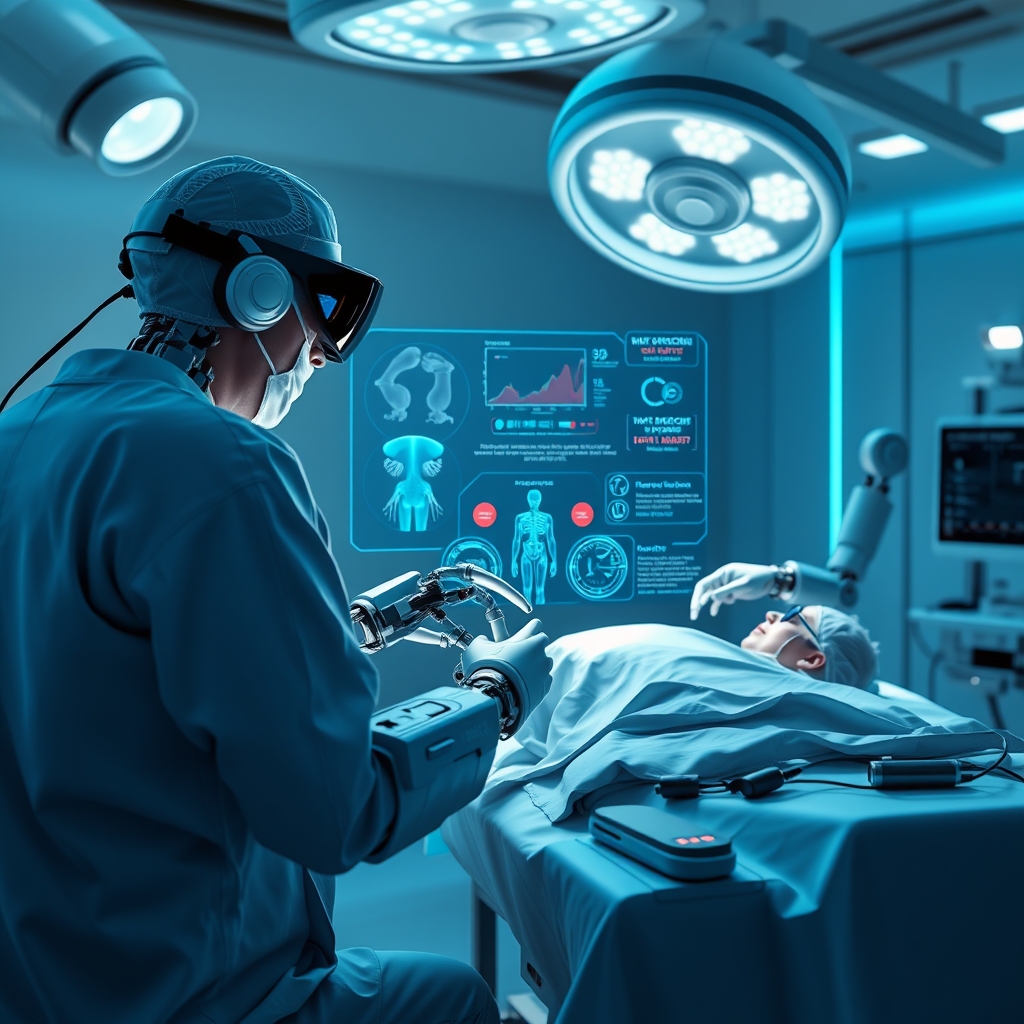
The operating room of the 21st century is no longer confined to the steady hands of a surgeon and the glint of steel under surgical lights. Today, it is a symphony of precision, where artificial intelligence (AI) and robotic systems collaborate to push the limits of what was once thought possible in medicine. Robotic-assisted surgery, once a futuristic concept, has become a cornerstone of modern healthcare, transforming procedures from complex cardiac operations to delicate neurosurgeries. But this is only the beginning. As AI continues to evolve, it is not just assisting surgeons—it is redefining the very nature of surgical intervention.
The Evolution of Robotic-Assisted Surgery
Robotic-assisted surgery emerged as a response to the limitations of traditional laparoscopic techniques. Early systems, such as the da Vinci Surgical System, introduced in the late 1990s, provided surgeons with enhanced dexterity, 3D visualization, and tremor filtration. These innovations allowed for minimally invasive procedures with smaller incisions, reduced blood loss, and faster recovery times. However, the true revolution lies in the integration of AI, which is elevating these systems from mere tools to intelligent collaborators.
Modern robotic platforms are now equipped with machine learning algorithms that can analyze vast datasets of surgical outcomes, identifying patterns and optimizing techniques in real time. For example, AI can predict the optimal path for a surgical instrument, reducing the risk of complications and improving patient outcomes. In orthopedic surgeries, robotic systems like MAKO assist in joint replacements by creating personalized 3D models of a patient’s anatomy, ensuring implants are positioned with sub-millimeter accuracy. This level of precision was unimaginable just a decade ago.
The Role of AI in Surgical Decision-Making
AI’s impact extends beyond mechanical assistance. In the operating room, AI-powered systems are now capable of augmenting a surgeon’s decision-making process. During procedures, AI can process data from intraoperative imaging, such as CT scans or ultrasounds, to provide real-time feedback. For instance, in tumor resections, AI can differentiate between healthy and cancerous tissue with remarkable accuracy, guiding surgeons to remove only what is necessary while preserving critical structures.
Moreover, AI is enabling predictive analytics that can foresee potential complications before they arise. By analyzing a patient’s vitals, surgical history, and even genetic data, AI can alert surgeons to risks such as adverse reactions to anesthesia or postoperative infections. This proactive approach not only enhances patient safety but also reduces the cognitive load on surgeons, allowing them to focus on the most critical aspects of the procedure.
The Internet of Medical Things: A Connected Ecosystem
The integration of robotic-assisted surgery with the Internet of Medical Things (IoMT) is creating a seamless, interconnected healthcare environment. IoMT refers to the network of medical devices, software applications, and health systems that communicate and exchange data. In the context of surgery, this means that robotic systems can share data with electronic health records (EHRs), imaging systems, and even wearable devices worn by patients before and after surgery.
For example, a patient scheduled for a robotic-assisted prostatectomy may wear a continuous glucose monitor (CGM) or a smart cardiac implant in the weeks leading up to the procedure. These devices transmit real-time data to the surgical team, allowing them to tailor the approach based on the patient’s unique physiological profile. Postoperatively, IoMT-enabled devices can monitor recovery, alerting clinicians to signs of infection or other complications before they become critical. This level of connectivity ensures that care is not just reactive but anticipatory, shifting the paradigm from treatment to prevention.
Remote Patient Monitoring: Extending Care Beyond the Hospital
The benefits of robotic-assisted surgery and IoMT are not confined to the operating room. Remote patient monitoring (RPM) devices are extending the reach of surgical care into patients’ homes, enabling continuous oversight without the need for prolonged hospital stays. Wearable biosensor patches, for instance, can track vital signs, mobility, and even wound healing in real time, transmitting data to healthcare providers via secure cloud platforms.
For patients recovering from robotic-assisted surgeries, RPM devices offer peace of mind. A smart orthopedic implant, for example, can monitor the stability of a knee replacement, alerting the surgical team if there are signs of loosening or infection. Similarly, portable ultrasound machines and handheld medical resonance imaging (MRI) devices allow for point-of-care diagnostics, reducing the need for follow-up visits and enabling timely interventions. This shift toward decentralized care is not only improving patient outcomes but also reducing the burden on healthcare systems.
The Future: Agentic Medical Technology and Autonomous Systems
As AI and robotics continue to advance, the concept of agentic medical technology—systems that can operate with a degree of autonomy—is becoming a reality. While fully autonomous surgery remains a contentious topic, semi-autonomous systems are already being tested in clinical settings. For example, some robotic platforms can now perform specific tasks, such as suturing or tissue dissection, with minimal human input, guided by AI algorithms trained on thousands of hours of surgical footage.
The potential for autonomous systems extends beyond the operating room. Hospital logistics robots are already being deployed to transport supplies, medications, and even lab samples, freeing up healthcare staff to focus on patient care. In diagnostics, automated endoscopy systems and microfluidic testing machinery are streamlining workflows, reducing human error, and accelerating the time to diagnosis. These innovations are not about replacing human expertise but augmenting it, creating a healthcare ecosystem where technology and clinicians work in harmony.
Ethical Considerations and the Path Forward
With great innovation comes great responsibility. The rise of AI and robotic-assisted surgery raises important ethical questions about patient consent, data privacy, and the potential for bias in algorithmic decision-making. As these technologies become more integrated into healthcare, it is crucial to establish robust regulatory frameworks that ensure safety, transparency, and equity. Patients must be informed about how their data is used, and clinicians must be trained to interpret AI-generated insights critically.
The journey of robotic-assisted surgery and AI in medicine is still in its early stages, but the trajectory is clear. These technologies are not just enhancing the capabilities of surgeons—they are reimagining what it means to deliver care. From the precision of smart orthopedic implants to the connectivity of IoMT, the operating room of the future is one where human ingenuity and machine intelligence converge to create outcomes that were once the stuff of science fiction. As we stand on the brink of this new era, one thing is certain: the boundaries of modern medicine are being redrawn, and the possibilities are limitless.